Process automation software or a scoped AI job?
Buy process automation software when a recurring workflow has a clear owner, stable rules, and enough future runs to justify setup and upkeep. Request a fixed-scope AI job when you can bound the inputs, acceptance criteria, and delivery artifact, but a permanent automation is premature. Keep the process manual when the work is still changing or when nobody owns the result. The choice is not about which tool has the longest feature list. It is about the operating commitment you are ready to make.
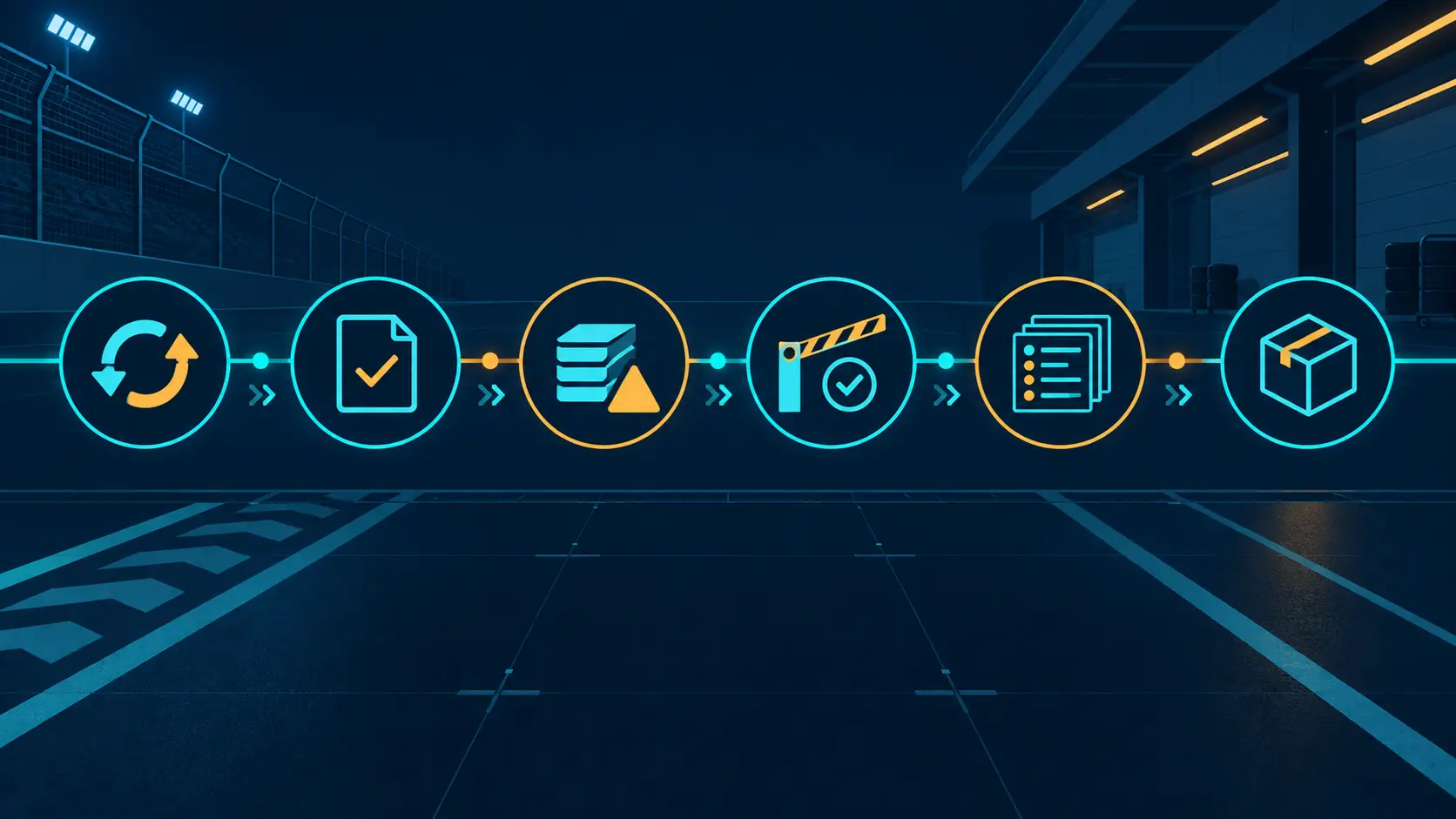
The shortest useful test is this: are you buying a lasting operating system for a workflow, or buying one defined result?
What is process automation software?
Process automation software runs repeatable, multi-step work according to defined rules. It is a good fit when the process itself deserves a permanent home.
IBM defines business process automation as a strategy that automates complex and repetitive business processes to streamline day-to-day operations (IBM). Red Hat defines it as the use of software to automate repeatable, multi-step business transactions (Red Hat).
Those definitions point to the real selection question. You are not only choosing software. You are deciding whether a process is stable enough to encode, assign, monitor, and maintain.
Common candidates include:
- recurring intake and routing;
- approval flows with named decision makers;
- scheduled document or data preparation;
- repeated handoffs between known roles;
- status updates triggered by defined events.
The category can include workflow automation software, business process automation software, and robotic process automation. Labels matter less than the operating model. A tool still needs someone to own the workflow, handle exceptions, and approve changes.
A DataForSEO search-result description dated September 8, 2026 says Microsoft Power Automate can automate workflows and business processes across apps, systems, and websites with AI, digital automation, and robotic process automation (Microsoft). A direct refetch of the linked page returned HTTP 403, so treat this as SERP wording, not a fresh page verification. That description shows how broad a platform can be. Breadth is useful only when your process needs it.
When should you buy process automation software?
Buy a platform when the workflow recurs, its rules are stable, and a named owner will maintain it. The expected series of runs must justify a lasting system.
Look for evidence inside the workflow, not in a vendor comparison page. A platform becomes the stronger choice when most of these statements are true:
- The work repeats on a known trigger or schedule.
- The inputs arrive in a consistent form.
- The same rules apply across runs.
- A person or team owns the process after launch.
- Exceptions can follow a defined path.
- The workflow must connect several recurring steps.
- You expect to revise the process as operations change.
Ownership is the deciding condition. Without it, automation becomes an unattended set of rules. The software may still run, but nobody can judge whether the result remains useful.
A recurring workflow without an owner is not ready for a platform. It is an unassigned operating responsibility.
Before buying, write down who can change the workflow, who receives failed cases, and who accepts the output. If those names are missing, the buying decision is early.
For a wider view of implementation choices, read business process automation services and AI workflow automation.
When is one fixed-scope run the better choice?
Choose one scoped run when the result can be specified and accepted, but repeated operation is uncertain. You buy the deliverable without adopting a permanent workflow.
A fixed-scope AI job sits between manual work and a platform purchase. It makes sense when you have a real task now, yet you do not know whether the task will recur often enough to automate.
The job needs four firm boundaries:
- Inputs: the files, fields, links, or instructions supplied at the start.
- Scope: the work included and the cases excluded.
- Acceptance criteria: the checks that decide whether the result is usable.
- Delivery artifact: the file, report, dataset, or other output handed back.
This route also works as a learning step. A completed run exposes unclear inputs, disputed rules, and missing acceptance checks. If the same job later recurs, those lessons can form a better automation brief.
Do not call vague assistance a scoped job. "Improve our operations" has no acceptance point. "Transform these approved inputs into this defined artifact, subject to these checks" can be reviewed.
Read fixed-scope AI agent jobs for the service model behind this option.
How do you choose between software, a scoped job, and manual work?
Choose by process maturity and commitment. Stable recurring work points to software. A bounded result with uncertain recurrence points to a scoped job. Unstable work stays manual until its shape is clear.
Use this matrix before you compare products:
| Decision signal | Buy process automation software | Request one fixed-scope run | Keep the work manual for now |
|---|---|---|---|
| Recurrence | Expected and frequent enough to matter | Possible, but not yet proven | Rare or unclear |
| Workflow owner | Named and available | A requester can accept one result | No clear owner |
| Rules | Stable across runs | Stable for this job | Still changing during the work |
| Inputs | Consistent and repeatable | Bounded for this run | Incomplete or discovered as you go |
| Acceptance | Ongoing service checks are known | Artifact checks are explicit | Success is still subjective |
| Exceptions | Defined paths and escalation | Excluded or handled within scope | Most cases need fresh judgment |
| Commitment | Setup, governance, and upkeep are justified | One deliverable is justified | More observation is needed |
| Best next action | Select and configure a platform | Write a job brief and request the run | Document the next manual run |
The middle column is easy to miss. Teams often compare a permanent platform with doing everything by hand. A scoped run offers a third option when the output is clear but the long-term process is not.
Do not automate uncertainty. Bound it first. One accepted artifact can teach you more than a premature workflow build.
What should you check before selecting automation software?
Check the process before the product. A sound shortlist starts with ownership, inputs, rules, exceptions, acceptance, and upkeep.
Use this acceptance checklist:
Then assess products against that brief. Ask each supplier to show how its product handles your actual trigger, your exception path, and your acceptance check. A generic feature tour cannot answer those questions.
Avoid selection criteria that reward quantity without relevance. A longer integration list does not settle whether your inputs are ready. More templates do not assign an owner. An AI label does not define acceptance.
Can ChatGPT create workflows?
A conversational AI can help draft steps, rules, and job instructions. That draft is not an owned production workflow until people validate the rules, boundaries, exceptions, and output.
Use an AI assistant to turn notes into a first process description, identify unresolved decisions, or draft test cases. Keep the approval decision with the process owner. The owner must confirm what happens when inputs are missing, rules conflict, or the output fails its acceptance checks.
A useful drafting sequence is:
- Describe the trigger and the desired result.
- List every required input.
- Write the normal path as ordered steps.
- Add exceptions and stop conditions.
- Define acceptance checks for the output.
- Assign an owner for operation and change.
If you cannot complete those steps, you are not ready to select permanent software. You may still be ready to define one bounded job.
How should you make the final decision?
Start with the smallest commitment that produces a reviewable result. Move to a platform only when recurrence, stability, and ownership are all present.
Use these decision rules:
- Buy software if you need an ongoing workflow and can own its operation.
- Request a scoped job if you need one defined artifact and can state how to accept it.
- Keep the work manual if the inputs, rules, or desired result are still moving.
- Reassess after a manual or scoped run if the task begins to repeat.
If a scoped run fits, estimate the job or Request a scoped AI job.
FAQ
What are process automation softwares?
The usual phrase is "process automation software." It means software used to run repeatable, multi-step processes according to defined rules. The right category depends on the process, not on the label alone.
What is the best workflow automation software?
There is no useful universal winner. The best fit is the product that supports your real trigger, inputs, rules, exception path, acceptance checks, and ownership model without adding unjustified upkeep.
Should a small team automate a process or outsource one run?
Choose by maturity, not team size. Automate stable recurring work with a clear owner. Request one scoped run when the artifact and acceptance criteria are clear but recurrence is uncertain.
What is the difference between workflow automation and a fixed-scope AI job?
Workflow automation creates an ongoing system for repeated operation. A fixed-scope AI job produces one agreed artifact from bounded inputs and criteria.
Can a scoped job become a permanent automation later?
Yes. Use the run brief, resolved exceptions, and acceptance checks as evidence for a later automation specification. Reassess ownership and recurrence before you build it.
Written by Tileo, operator of Pitstop.