AI Proposal Generators for Consulting Firms: What to Automate and What to Approve
By Loïc Guyon, operator of Pitstop · 8 min read
On this page
- What is an AI proposal generator?
- What should a consulting proposal generator produce?
- Which parts should an agent draft and which should a partner own?
- How do you prevent an approved proposal from changing before send?
- How should a consulting firm evaluate an AI proposal tool?
- Where does Pitstop fit in the proposal workflow?
- What else should buyers ask about AI proposal generators?
For a consulting firm, the best AI proposal generator is not the one that produces the longest first draft. It is the workflow that turns an approved client brief into a reviewable scope, assumptions, and commercials, preserves the boundaries of the source material, and waits for a partner to approve the exact version before the proposal leaves the firm. An agent can draft from an approved brief and source materials. The partner still owns scope, commercials, exceptions, and the final send. Pitstop can provide the workspace and approval layer around that process, but it is not presented here as the proposal generator itself.
What is an AI proposal generator?
An AI proposal generator helps create part or all of a proposal draft from instructions and supplied information. For a consulting firm, that draft is only one part of the job. A useful proposal must express what the firm understands, what it will deliver, where the limits sit, and what the client will pay.
The phrase can describe several different products. One may offer a guided form that produces proposal text. Another may help writers assemble answers or reuse approved material. A third may create a formatted proposal from structured fields. Do not choose by the label alone. Ask what information enters the system, what the agent may write, and how a reviewer controls the version that leaves.
This distinction matters in consulting because the proposal is a commitment. The generator may supply language, but the firm remains responsible for the offer. Treat the tool as a drafting participant inside a controlled process, not as the owner of the proposal.
What should a consulting proposal generator produce?
The useful output is a reviewable proposal whose statements can be traced to an approved brief or named source material. The first draft should help a partner inspect the offer. It should not hide important decisions inside fluent prose.
A practical draft can contain the following sections:
- A concise account of the client's situation, limited to what the approved brief says.
- The proposed outcomes and deliverables, written so that the partner can accept or revise each commitment.
- Scope boundaries, dependencies, and assumptions that affect the work.
- Responsibilities for the firm and the client.
- Commercial terms supplied or confirmed by the partner.
- Exceptions, open questions, and missing information that require a decision.
The draft should expose uncertainty instead of filling gaps with plausible language. If the source materials do not state a dependency, the agent should not invent one. If a commercial term has not been approved, the draft should leave it open for the partner rather than infer an answer.
Source boundaries are equally important. Give the agent an approved client brief and the specific material it may use. Then require the draft to stay within that set. This gives the reviewer a defined basis for checking claims and reduces the chance that unrelated material slips into the offer.
Which parts should an agent draft and which should a partner own?
The agent can turn approved inputs into draft language, while the partner owns every decision that commits the firm. That division is clearer when the team assigns ownership by proposal element rather than asking the agent to "write the proposal" without limits.
| Proposal element | Agent's role | Partner's role | Approval question |
|---|---|---|---|
| Client context | Draft a summary from the approved brief. | Confirm that the summary is accurate and relevant. | Does this reflect what the client said without adding a claim? |
| Scope and deliverables | Organize supplied decisions into clear language. | Set and approve the commitments. | Can the firm deliver every sentence as written? |
| Assumptions and dependencies | Surface items found in the approved sources. | Resolve gaps and approve the boundaries. | Are the conditions explicit enough to review? |
| Commercials | Place partner-supplied terms into the draft. | Own pricing, payment terms, and commercial exceptions. | Do the terms match the partner's decision exactly? |
| Final proposal | Request approval for the exact content. | Read, approve, and own the final send. | Is this the exact version the partner intends to release? |
A safe handoff is explicit. The partner does not approve a general idea, a prompt, or an earlier draft. The partner approves the text that is ready to leave. If a colleague or agent changes that text, the changed version returns for approval.
How do you prevent an approved proposal from changing before send?
Tie approval to the exact proposal content, then invalidate that approval whenever the content changes. A status label such as "approved" is not enough if it can remain attached after someone edits the proposal.
A controlled proposal workflow follows a short sequence:
- The team approves the client brief and identifies the source materials the agent may use.
- The agent drafts the proposal from those inputs and marks gaps for review.
- The partner reviews scope, assumptions, commercials, and exceptions.
- The agent requests approval for the exact final text.
- The partner approves that exact version and owns the final send.
- If the content changes, the previous approval no longer applies and the revised text returns to the partner.
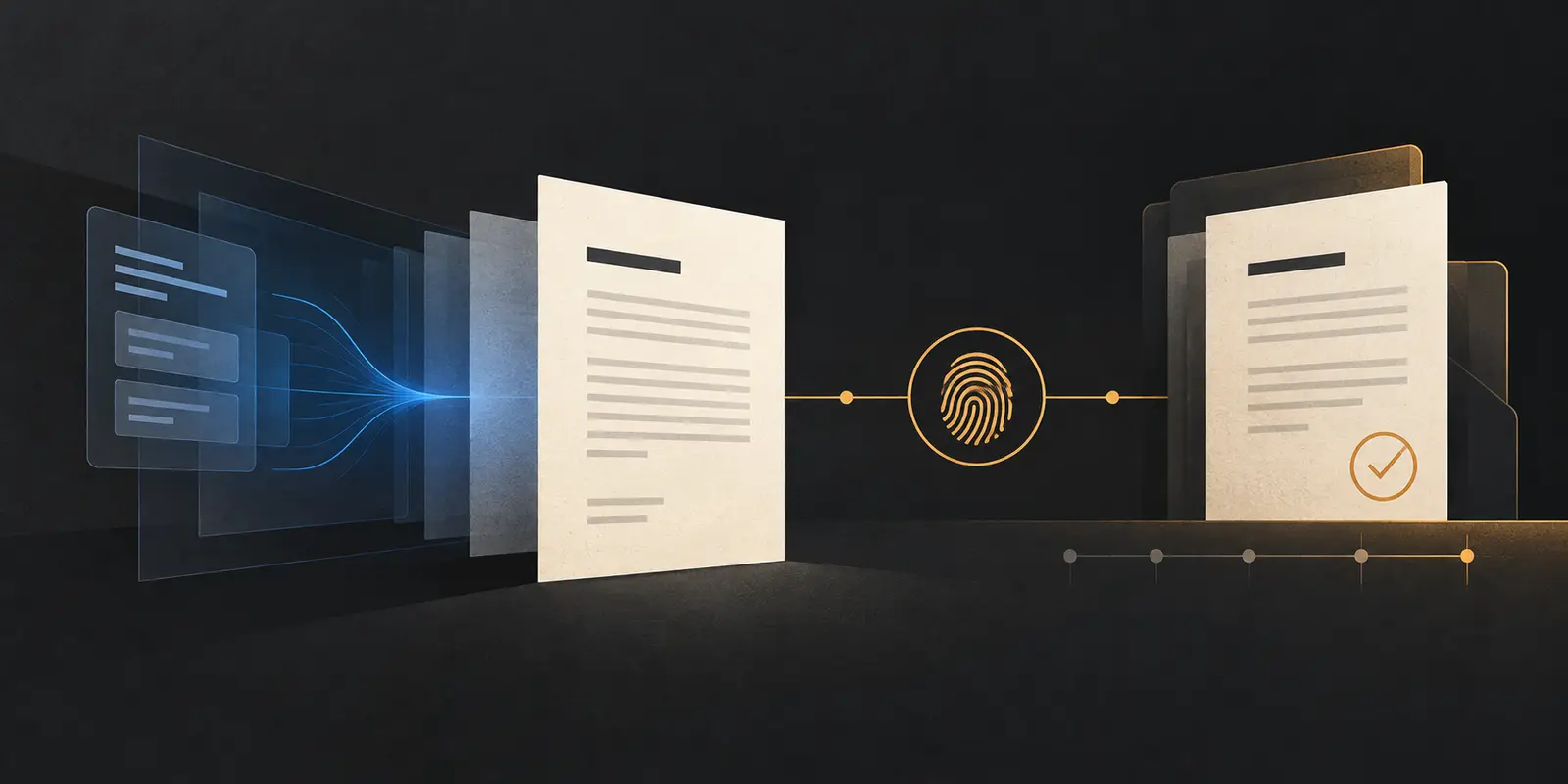
Pitstop ties approval to an exact content fingerprint. If the content changes, the prior yes no longer counts. Its journal records the activity in a hash-chained, exportable record, so the firm can see a gap between a request, an approval, and later content.
This control is about identity, not visual similarity. A changed sentence may look minor on the page, but it is no longer the text the partner approved. The workflow should treat the revised proposal as a new approval request.
How should a consulting firm evaluate an AI proposal tool?
Evaluate the whole path from approved input to exact-text sign-off, not the quality of a sample paragraph alone. A fluent demo can show writing ability. It does not show whether your team can control sources, expose missing decisions, or preserve approval after handoff.
Use a representative brief and inspect the resulting proposal against the same questions your partner uses in a live review:
- Can the team define which brief and source materials the agent may use?
- Does the draft separate supplied facts from open questions?
- Can reviewers inspect scope, assumptions, dependencies, and commercials without searching through hidden context?
- Can the partner approve the exact content rather than a task status?
- Does any edit remove the force of the earlier approval?
- Can an agent request approval without gaining the ability to approve its own work?
- Can the firm keep a useful record of requests, decisions, and changed content?
- Does the commercial model fit how the firm buys software?
Short selection checklist
- Approved inputs are identifiable.
- Draft gaps remain visible.
- Scope and commercials have named human owners.
- Approval applies to exact content.
- Changed content requires new approval.
- The partner owns the final send.
Also separate proposal generation from operational control. A proposal tool may help create the document. Your workspace should make ownership, review, and approval clear across the firm. That distinction prevents a strong drafting feature from becoming a weak governance decision.
Where does Pitstop fit in the proposal workflow?
Pitstop is the workspace and approval layer around an illustrative proposal process, not a claim that Pitstop generates proposals. An agent can draft from an approved brief and source materials. Pitstop gives the firm a place to run the surrounding work with clients, projects, knowledge, finance, meetings, and validations in view.
Each agent has configured autonomy. External output waits for a person, and an agent can request approval but can never approve its own request. A person reviews the exact text. If that content changes, the earlier approval no longer counts. The journal makes any gap visible and can be exported.
Agents may come from ChatGPT, Claude, or Codex through a remote MCP server that uses OAuth, or they may be built by AI Jungle. This arrangement keeps the operating rule consistent across agents: the agent requests, and the person decides.
Pitstop is hosted on AI Jungle servers in Germany. Its commercial model is one price per firm, never per seat. Read more about the Pitstop workspace for professional-services firms and the AI governance framework for small firms.
If that approval model fits your proposal process, Get Pitstop for your firm.
What else should buyers ask about AI proposal generators?
Can a free AI proposal generator handle a consulting proposal?
A free tool can help draft text, but the firm still needs to assess the complete workflow. Check source boundaries, ownership of scope and commercials, exact-text approval, and the final handoff. Price alone does not answer those questions.
Should the final proposal be a PDF?
The file format does not replace approval of the content. If the firm uses a PDF for delivery, the partner should review the exact content represented in that final file. A change made before export or after an earlier review requires another check of the revised version.
What source documents should the agent use?
Give the agent an approved client brief and only the named source materials allowed for that proposal. The agent should not fill an evidence gap with unrelated material. Missing scope, assumptions, or commercial decisions should return to the partner as open items.
How should a firm compare pricing?
Compare the buying unit and the workflow included, without treating price as a proxy for control. Ask whether a product charges by user, by firm, or through another model, and confirm what the quoted plan covers. Pitstop uses one price per firm, never per seat.
Who gives final approval?
A person with authority over the proposal should approve the exact final text. In the workflow described here, that person is the partner who owns scope, commercials, exceptions, and the final send. The agent may request approval but may not approve the request.